- SCO 214, VIP Central, VIP Road, Zirakpur
- +91 9711153521 : +91 9467948024
- 9AM - 8 PM

Punjab and Haryana High Court Grants Bail in NDPS Matter
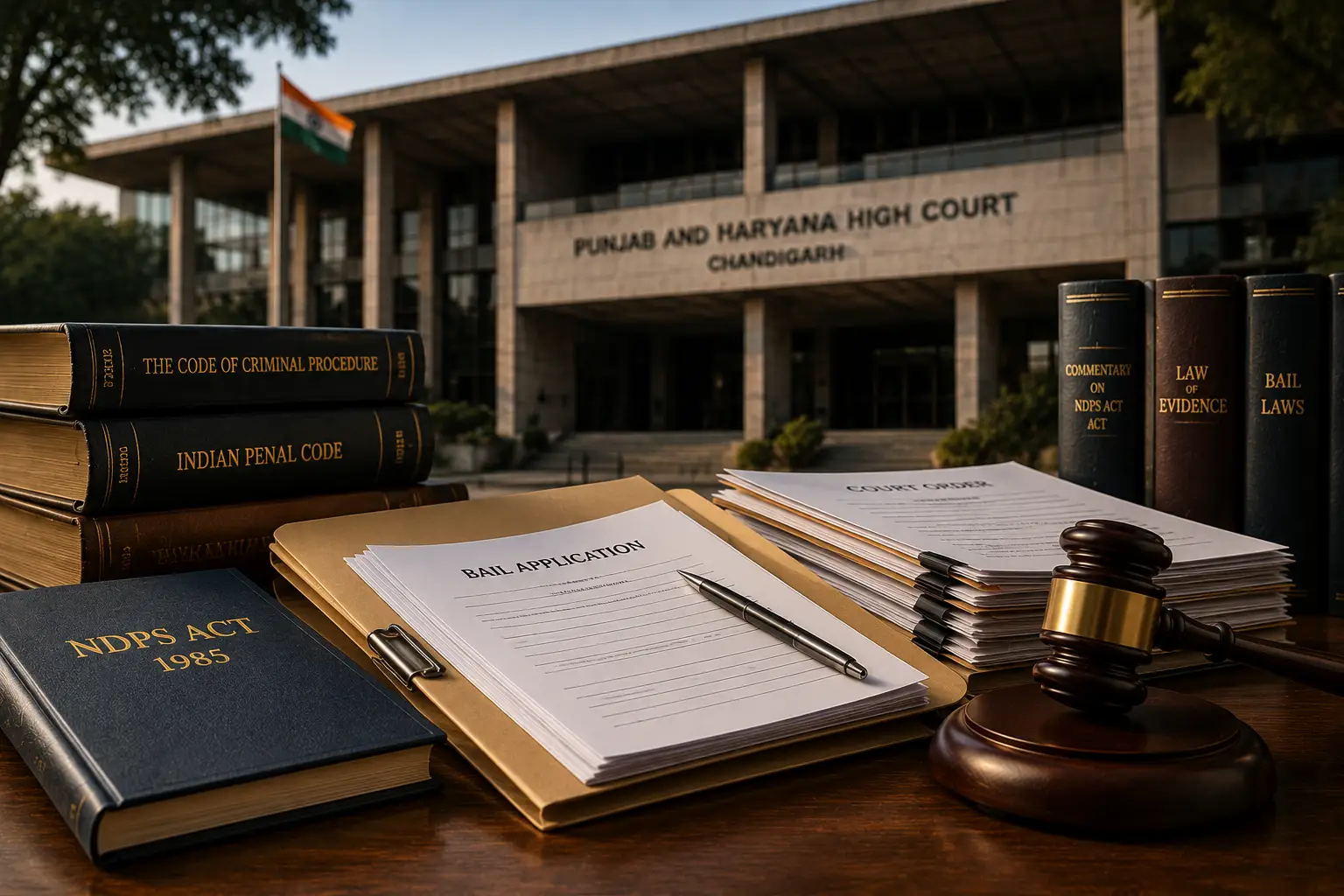
Punjab and Haryana High Court Grants Bail in NDPS Matter
Matters arising under the NDPS Act often involve strict statutory conditions relating to bail, especially where allegations involve commercial quantity recovery. Courts are generally required to examine the facts carefully while balancing the seriousness of the allegations with the rights of the accused and the progress of the trial.
In a recent matter before the Punjab and Haryana High Court at Chandigarh, Advocate Shubham Aggarwal and Advocate Suksham Aggarwal appeared on behalf of the petitioner seeking regular bail in a case registered under the provisions of the NDPS Act.
According to the prosecution case, the petitioner had been apprehended during police patrolling and certain capsules and tablets were allegedly recovered from him. The investigation subsequently led to registration of an FIR under Sections 22, 61, and 85 of the NDPS Act at Police Station Zirakpur, SAS Nagar.
The matter had earlier been placed before the learned Additional Sessions Judge, SAS Nagar, where the request for bail was declined. The petitioner thereafter approached the Punjab and Haryana High Court seeking regular bail.
During the hearing before the High Court, it was argued on behalf of the petitioner that the alleged recovery had been effected from a public place and that no independent witness had been associated during the proceedings. It was also submitted that the petitioner had no criminal antecedents and had not been involved in any other criminal case.
The State opposed the bail plea and submitted that part of the alleged recovery fell within the category of commercial quantity, thereby attracting the rigours of Section 37 of the NDPS Act. However, it was also brought to the notice of the Court that out of 13 prosecution witnesses, only 2 witnesses had been examined till that stage and the petitioner was not involved in any other case.
While considering the matter, the Punjab and Haryana High Court examined the custody period undergone by the petitioner, the stage of trial, and the broader principles governing prolonged incarceration in NDPS matters. The Court referred to the judgment of the Hon’ble Supreme Court in Mohd Muslim @ Hussain vs State (NCT of Delhi) concerning constitutional considerations relating to bail and delay in trial under stringent statutes.
The High Court observed that the petitioner had already undergone substantial custody and that the trial was likely to take considerable time. The Court further clarified that the veracity of the allegations would ultimately be assessed during trial upon appreciation of evidence led by both sides.
Keeping in view the overall facts and circumstances of the matter, the Hon’ble High Court allowed the petition and granted regular bail to the petitioner subject to furnishing appropriate bail and surety bonds before the concerned Court.
This matter reflects how courts examine not only the statutory framework under the NDPS Act, but also factors such as prolonged custody, pace of trial, criminal antecedents, and constitutional considerations while dealing with regular bail petitions.
Frequently Asked Questions
Can bail be granted in NDPS matters involving commercial quantity?
The grant of bail depends on the facts of each case, the statutory requirements under Section 37 of the NDPS Act, custody period, and the material placed before the Court.
Why is trial delay important in NDPS bail matters?
Courts may consider prolonged incarceration and delay in trial while examining bail requests under stringent statutes.
What factors are considered in an NDPS bail petition?
Courts may examine custody period, criminal antecedents, stage of trial, nature of recovery, and the overall facts and circumstances of the matter.
Which Court decided this NDPS bail matter?
The matter was decided by the Punjab and Haryana High Court at Chandigarh.
Recent Post
-
 Can Police Arrest You Without Prior Notice? Court Directs 5 Days’ Notice Before Arrest
 -
 New Offences Added After Anticipatory Bail — Can Police Arrest You Again?
 -
 Electricity Department Negligence: Family Awarded ₹8.80 Lakh Compensation in Ambala
 -
 Plot Cancelled During a Property Dispute and Sold to Someone Else — What Did the RERA Tribunal Do?
 -
 Parties Reached a Compromise, But What Happens to the FIR?
At Siddhik Law Chambers, matters involving criminal proceedings, NDPS litigation, regular bail petitions, and High Court remedies are examined carefully on the basis of the factual record, procedural safeguards, and the applicable legal framework.
Need Legal Clarity?
For general information or appointment requests, feel free to contact Siddhik Law Chambers.